For Engineered Retaining Wall & Slope Contractors
Win the Engineered Wall Work Instead of Bidding Against Somebody Stacking Block
Wall work is the one hardscape category where doing it correctly costs visibly more.
Drainage, geogrid, base depth, compaction, stamped engineering - none of it shows in a finished photo, and homeowners comparing quotes rarely know what they are missing.
Four numbers frame every wall decision (see calculator below):
- What does an average wall project contract for?
- What margin is left after excavation, stone, drainage and engineering?
- How many wall projects do you want to add each month?
- Out of ten site visits, how many end in signed work?
With those in hand we can set a defensible cost ceiling per signed wall.
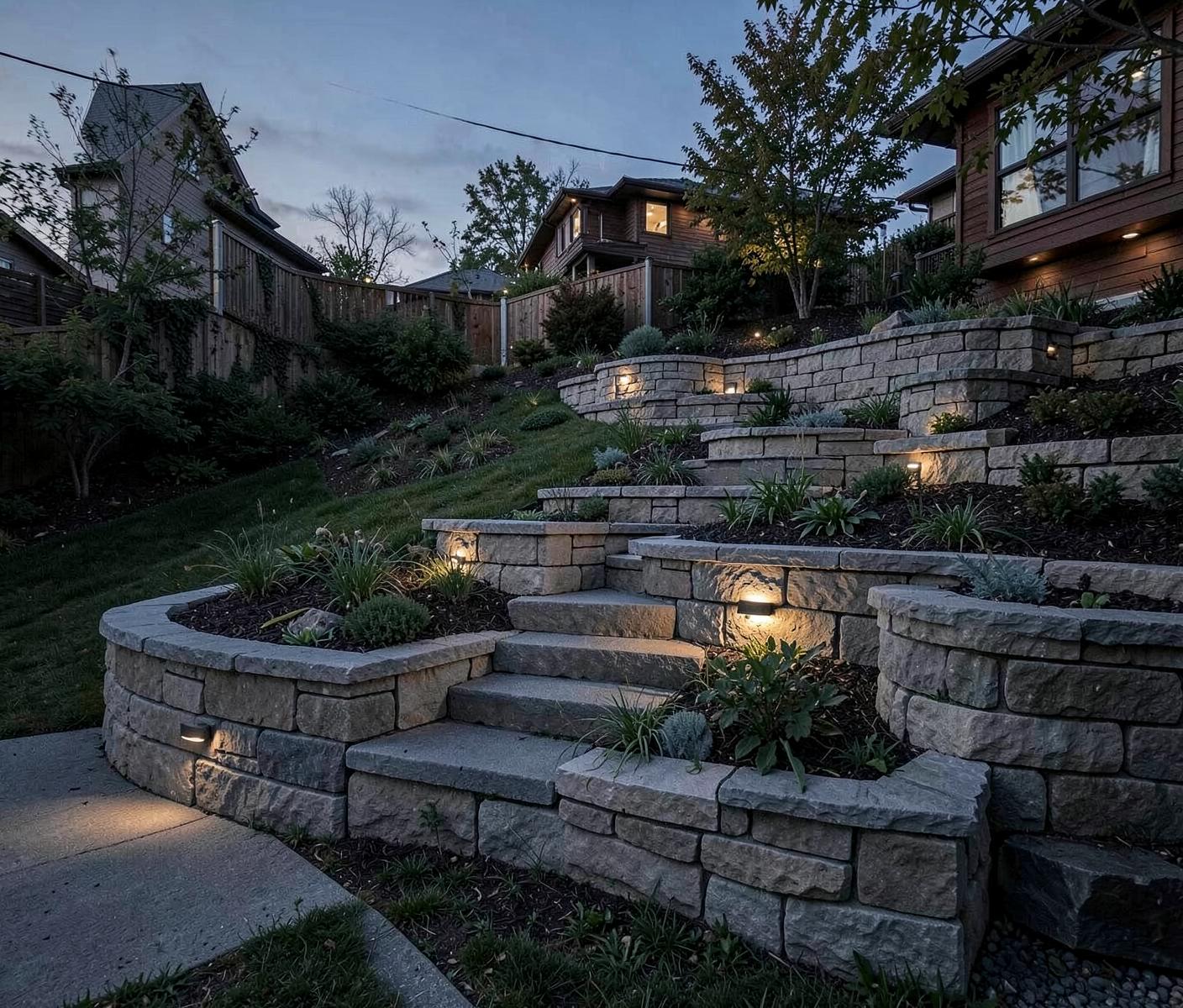
Completed Project
Tiered block walls - Steps - Wall lighting
The Bidding Problem
Priced Against Work That Will Fail in Five Years
Homeowners with a failing slope want it solved, but they shop on the total at the bottom of the page.
The bid that skips the drain rock, thins the base and ignores geogrid always looks better on paper.
Every site is different, so quoting takes real time - soil, access, water, height, surcharge - and you cannot recover that time on the ones you lose.
Add emergency calls after storms and the pipeline swings hard from month to month with nothing steady underneath it.
Before you sharpen another bid, get clear on the underlying figure:
What is one additional engineered wall project worth to you?
Wall Project Math
What Can You Spend to Win One More Wall Project?
Use your own contract average, your margin after drainage and engineering, and your site-visit close rate. You will see the profit in one wall, the site visits behind it, and what acquisition costs the project can support.
A rough figure is fine to start with.
Includes advertising and marketing costs. Your actual plan will use your market and service mix.
One wall project
$30,000
Approx. gross profit on one wall project
$12,000
Added sales per month
$60,000
2 more wall projects a month
Serious prospects needed
About 7
every month
Monthly spend to win 2 wall projects
$4,000
Gross profit left after that spend
About $20,000
Planning math only - not a promise. Your market, pricing, competition, lead quality and sales process all move these figures.
What different acquisition costs do to wall profit
| Spend per wall project won | Monthly spend for 2 wall projects | Gross profit left |
|---|---|---|
| $1,250 | $2,500 | $21,500 |
| $2,500 | $5,000 | $19,000 |
| $3,750 | $7,500 | $16,500 |
| $6,250 | $12,500 | $11,500 |
Now Let's Talk About Attracting the Right Slope Work
The Right Measure
The Cheapest Wall Leads Are Usually the Worst Ones
A homeowner hunting the lowest number on a 30-inch garden wall costs little to reach and will award the job to whoever cuts the most corners.
A homeowner facing a failing eight-foot slope with water problems values engineering, and that project can carry real acquisition cost.
If you judge marketing on lead price, you will end up bidding against the corner-cutters all year.
The number worth watching is cost per signed engineered wall.
So we size spend against the wall project you want, then aim at homeowners who need it done right.
The Work Itself
Three Ways to Get Paid for Doing It Properly
Show Up for Problem Searches
Wall work is problem-driven. Bulging, leaning, failing, eroding - those searches carry urgency and budget.
This can include
- Pages for failing, leaning and replacement walls
- Content on drainage, geogrid and engineering
- Search ads on repair and slope-failure terms
- Google Maps presence with tiered-wall photos
- Town pages across hilly parts of your area
- Storm-season budget flexibility
Make Quality Visible Before the Bid
Homeowners cannot see base prep in a finished photo. Show it before your quote gets compared.
This can include
- Guidance on the base and drainage shots worth capturing
- Plain-language explanation of engineered walls
- Stamped-plan and permit credentials
- Reviews that mention drainage and longevity
- Warranty terms stated clearly
- Tracking on every call and form
Protect the Quotes You Worked For
Wall quoting is expensive. Losing one to silence is worse than losing on price.
This can include
- Missed-call text-back from the field
- Fast site-visit scheduling
- Follow-up sequences on issued quotes
- CRM stages from site visit to signed contract
- Storm-triggered outreach to earlier quotes
- Reactivation of last year's unsold bids
Free Growth Analysis
A Short Look at Your Wall Pipeline
Step 1
What Your Wall Work Pays
- Contract average by wall type and height
- Margin after stone, drainage and engineering
- Mix of garden walls versus structural work
- Target wall projects per month
- Site-visit close rate
- Crew and equipment capacity
Step 2
How Homeowners Reach You Now
- Where current wall inquiries originate
- Visibility on failure and repair searches
- What your site says about engineering
- Speed of first response
- How site visits are scheduled
- What happens to quotes after they are sent
Step 3
Where Wall Jobs Get Lost
- Bids lost with no follow-up at all
- Quoting time spent on unqualified slopes
- No proof of drainage and base work
- Storm demand you were not positioned for
- Traffic from block-stacking price shoppers
- Sources you cannot attribute
Step 4
What You Take Away
A written summary of where wall projects are being lost and what changing that would cost against your own contract average.
The plan comes itemized, sorted the same way every time:
- Credibility fixes worth doing immediately
- Work that only pays above a certain wall volume
- Tests worth a bounded budget
- Spending we would advise you to skip
The analysis is yours to keep regardless of what happens next.
Illustrative Model
A Year Modeled on Structural Work, Not Garden Walls
Two extra $30,000 engineered walls a month is a different plan than eight small block borders.
Setting the target first keeps the plan honest about what it has to produce.
This extends the calculator's arithmetic over twelve months.
Modeled Target
2 Additional Wall Projects / Month
Modeled at a $30,000 average signed contract
- Additional wall projects over 12 months
- 24
- Contract value of that work
- $720,000
- Gross profit at a 40% margin
- $288,000
- Site visits required at 3-in-10
- 80
- Acquisition budget at $2,000 per project
- $48,000
- Gross profit remaining after acquisition
- $240,000
Illustration built from the inputs above. Not a projection of your results, revenue, lead volume or job volume.
Measurement
Reporting Built Around Signed Walls
Every month you should be able to see:
- Wall inquiries received
- How many were structural rather than decorative
- Site visits performed
- Wall projects signed
- Value of the signed work
- The source behind each signed project
Inquiries
34
Structural Work
16
Site Visits
13
Projects Signed
4
Signed Value
$120,000
Avg. Project
$30,000
Stage By Stage
- Inquiries34
- Structural16
- Site visits13
- Signed4
Source Of The Work
- Organic search33%
- Search ads28%
- Google Maps21%
- Builder referral12%
- Direct6%
Illustrative sample, not client results. Reporting depth depends on the tracking installed and the channels included.
Other Trades We Work With
Building more than one type of project? These pages run the same numbers with different job values and sales cycles.
Sequence
The Usual Order of Operations
Weeks 1-2
Instrument calls, forms and signed contract values so wall types can be compared.
Weeks 3-6
Add quote follow-up and shorten the time from inquiry to site visit.
Months 2-5
Build visibility on wall-failure searches and publish proof of engineered work.
Months 5-12
Weight budget toward the channels producing structural, engineered contracts.
Follow-up improvements can matter within weeks. Search visibility takes longer, and storm cycles distort any short read. Across a twelve-month plan the target project count usually comes into view around months three to five, which is a pattern rather than a commitment. We do not promise timing or a number of contracts.
Two Fair Questions
Why Act Now, and How Much Are You Locked Into?
Wall contractors raise both of these early, so here is the position plainly.
Why Not Wait for Storm Season?
Because when the slopes fail, the homeowners call whoever is already visible.
Rankings, reviews and proof pages cannot be built in the week after a storm, and bidding for attention during a surge costs the most it ever will.
The contractors who do well in a wet season prepared for it in a dry one.
Storm demand rewards whoever was already easy to find.
Can I Take Part of the Plan?
Yes. Every item stands alone.
We will model the expected result of a partial start - quote follow-up on its own, for instance - so you can weigh it against the full plan in dollars.
Start where the return is clearest and add only when the numbers earn it. Hint: Make sure you don't lose even one job your crews could have done.
See everything, buy only what pays for itself.
FAQ
Straight Answers Before You Book
Bring your contract average and site-visit close rate. That is all the arithmetic needs.
The plan is built to attract homeowners who care about structure, drainage, engineering, and durability instead of only the lowest visible number.
Start with the project categories you want more of, then model separate averages for low-ticket repairs, mid-range work, and high-value structural projects.
Yes. The same economics apply, but the plan may emphasize referral proof, partner pages, project documentation, and follow-up instead of homeowner-only demand.
It makes the message more specific. The site and campaigns should explain why engineering, permitting, drainage, and site conditions change the value of the work.
The analysis is about 20-30 minutes. Implementation time depends on the plan, but the goal is to avoid adding unnecessary operational burden.
In-progress proof can be valuable because it shows base prep, drainage, framing, equipment, and craftsmanship that finished photos may hide.
Pricing depends on the growth target, market, channels, content needs, tracking gaps, and the amount of execution required.
No. The analysis is intended to clarify the numbers and practical options before any buying decision.
Next Step
What Would Two More Engineered Walls a Month Be Worth?
Run the numbers, then let's look at why the right slope work is not finding you.
We will go through your inquiry mix, quote follow-up and the sources behind the walls you signed last year.
A written read on where wall bids are being lost
Budget sized to your contract average
Positioning built on engineering, not lowest price
Start with a single item if that is what makes sense
Free, about 25 minutes, nothing to purchase.