For Premium Natural-Stone Hardscape Contractors
Charge What Bluestone and Real Masonry Cost - and Still Fill the Calendar
Working in natural stone puts you at the top of your market's price range, which is exactly where homeowners get the least help understanding the difference.
Hand-cut treads, dry-laid stone, real mortar joints and proper detailing look like a line item next to a stamped-concrete bid until somebody explains them.
Premium work only pencils out when four figures are clear (see calculator below):
- What does a typical stone project contract for?
- What margin remains after material, skilled labor and waste?
- How many premium projects do you want to add each month?
- Out of ten qualified consultations, how many sign?
Those numbers set the ceiling on what winning one premium project can justify costing.
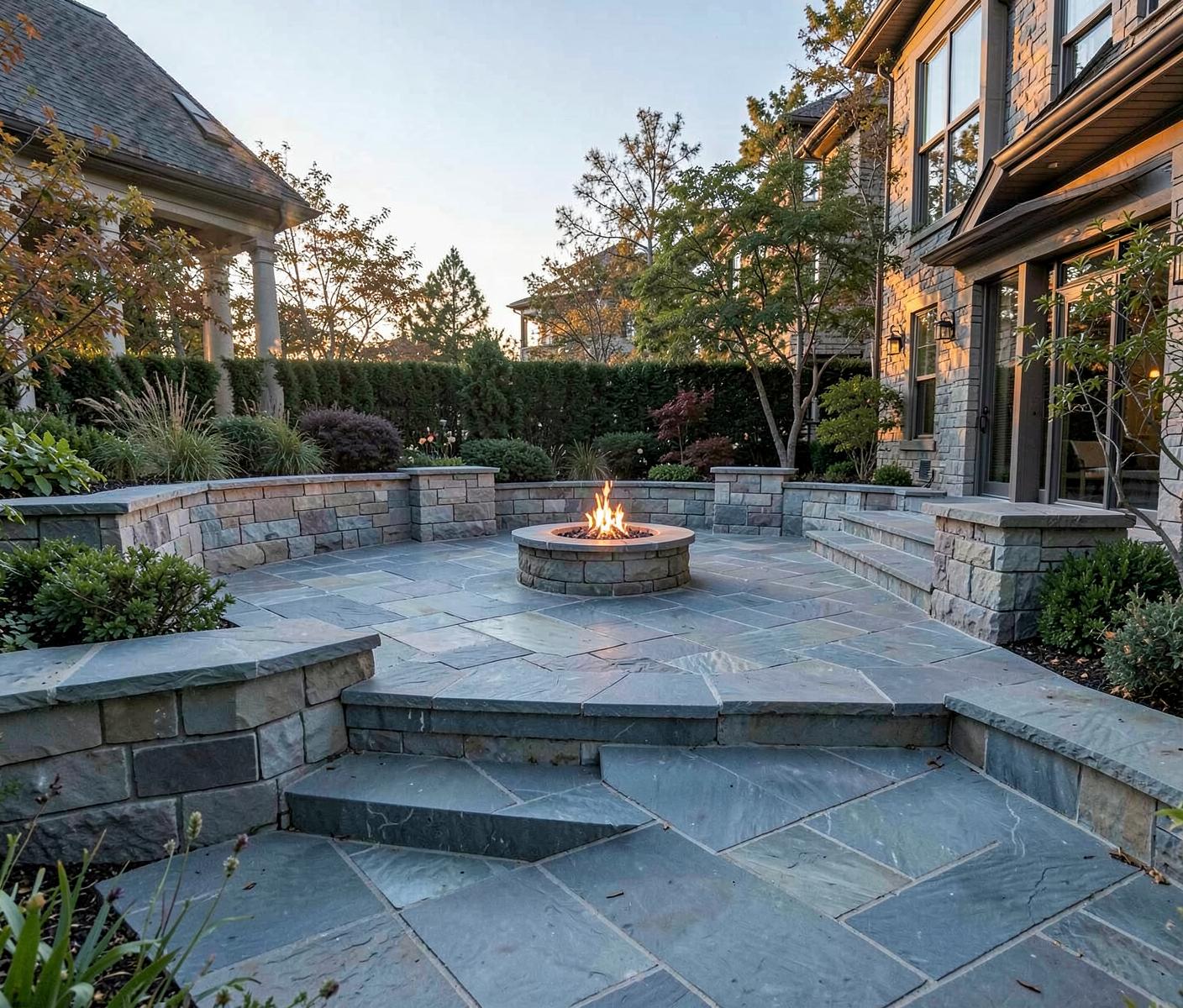
Completed Project
Bluestone terrace - Sitting walls - Fire bowl
The Premium Problem
The Best Craftsmanship Is the Hardest Thing to Advertise
Homeowners can see a finished photo. They cannot see the stone selection, the joint work, the mortar detail or the years it takes to train a mason.
So your bid lands next to a cheaper one that promises the same square footage.
Premium projects also attract the wrong inquiries - homeowners who like the pictures and had a stamped-concrete budget in mind.
Each of those consultations burns a slot you could have spent with someone ready to buy the work you actually do.
Before defending price on another proposal, get the underlying figure straight:
What is one additional premium stone project worth to your business?
Premium Project Math
What Can You Spend to Win One More Premium Project?
Enter your own contract average, margin after material and skilled labor, and consultation close rate. You will see the profit inside one project, the consultations required, and what acquisition cost the work can support.
A rough figure is fine to start with.
Includes advertising and marketing costs. Your actual plan will use your market and service mix.
One project
$15,000
Approx. gross profit on one project
$6,750
Added sales per month
$45,000
3 more projects a month
Serious prospects needed
About 10
every month
Monthly spend to win 3 projects
$5,250
Gross profit left after that spend
About $15,000
Planning math only - not a promise. Your market, pricing, competition, lead quality and sales process all move these figures.
How acquisition cost sits against premium margin
| Spend per project won | Monthly spend for 3 projects | Gross profit left |
|---|---|---|
| $750 | $2,250 | $18,000 |
| $1,500 | $4,500 | $15,750 |
| $2,250 | $6,750 | $13,500 |
| $3,750 | $11,250 | $9,000 |
Now Let's Look at Reaching Homeowners Who Buy Stone
The Right Frame
Premium Work Can Afford Expensive Attention
A project carrying $6,750 of gross profit can justify an acquisition cost that looks expensive on a cost-per-lead report.
That is a structural advantage, and most premium contractors never use it because they benchmark against cheap-lead advice written for high-volume trades.
The constraint is not budget. It is reaching the small number of homeowners in your area who buy real stone.
Judge everything on cost per signed premium project, not on traffic or lead price.
So we start from your margin and buy precision rather than volume.
The Work Itself
Three Ways to Win Premium Stone Work
Reach the Few Who Buy Stone
Your buyer pool is small and concentrated. Precision beats reach for premium hardscape.
This can include
- Material-specific pages for bluestone, granite and travertine
- Search targeting on stone and masonry terms
- Neighborhood-level ad targeting by home value
- Google Maps presence with detail photography
- Designer and architect referral positioning
- Content on stone selection and longevity
Make Craftsmanship Legible
Homeowners will pay for detail once they can recognize it. Most sites never show it.
This can include
- Guidance on the close-up joint and tread shots worth capturing
- Comparisons of natural stone against concrete products
- Mason credentials and training explained
- Investment ranges stated openly
- Reviews that speak to workmanship
- Tracking on every inquiry path
Protect Your Consultation Slots
At your price point, the scarce resource is your time with qualified homeowners.
This can include
- Budget qualification before the site visit
- Fast first response to serious inquiries
- Follow-up on proposals under consideration
- CRM stages from inquiry to signed contract
- Seasonal planning around your build calendar
- Reactivation of proposals from prior seasons
Free Growth Analysis
A Short Session on Your Premium Pipeline
Step 1
What Premium Work Pays You
- Contract average by material and scope
- Margin after stone, waste and skilled labor
- Share of revenue from premium versus standard work
- Target premium projects per month
- Consultation close rate
- Skilled-crew capacity
Step 2
How Your Market Finds You
- Sources of current premium inquiries
- Visibility on material-specific searches
- What your imagery signals about price
- Time to first response
- How consultations get qualified
- Where proposals lose momentum
Step 3
Where Premium Work Is Lost
- Consultations with mismatched budgets
- Proposals compared against concrete alternatives
- Craftsmanship never shown in detail
- Referral relationships left unmanaged
- Off-season gaps in visibility
- Channels with no attribution
Step 4
What You Come Away With
A written read on where premium projects are being lost and what changing it would cost against your own margin.
Recommendations arrive itemized so you can take part of it:
- Presentation work that raises perceived value quickly
- Investment that only pays at higher premium volume
- Tests worth a bounded budget
- Line items we would tell you not to fund
The analysis is yours to keep either way.
Illustrative Model
A Year Modeled at Premium Contract Values
Three extra $15,000 stone projects a month is a different business than a dozen small repair jobs.
Modeling the target first tells you how much precision you can afford to buy.
This carries the calculator's arithmetic across twelve months.
Modeled Target
3 Additional Premium Projects / Month
Modeled at a $15,000 average signed contract
- Additional projects over 12 months
- 36
- Contract value of that work
- $540,000
- Gross profit at a 45% margin
- $243,000
- Qualified consultations required at 3-in-10
- 120
- Acquisition budget at $1,750 per project
- $63,000
- Gross profit remaining after acquisition
- $180,000
Illustration built from the inputs above. Not a projection of your results, revenue, lead volume or job volume.
Measurement
Reporting Weighted Toward Contract Value
Each month, without chasing anyone for it:
- Inquiries received
- How many were budget-qualified
- Consultations held
- Premium projects signed
- Value of signed work
- The channel behind each signed project
Inquiries
25
Budget Qualified
11
Consultations
8
Projects Signed
3
Signed Value
$45,000
Avg. Project
$15,000
Stage By Stage
- Inquiries25
- Qualified11
- Consultations8
- Signed3
Source Of The Work
- Organic search30%
- Designer referral23%
- Search ads21%
- Google Maps17%
- Past client9%
Sample layout only - not client data. What can be attributed depends on tracking discipline and the channels in the plan.
Other Trades We Work With
Building more than one type of project? These pages run the same numbers with different job values and sales cycles.
Sequence
The Order We Usually Work In
Weeks 1-2
Instrument tracking so contract values, not lead counts, drive every later decision.
Weeks 3-6
Add budget qualification ahead of consultations and tighten proposal follow-up.
Months 2-5
Build visibility on material-specific searches and publish craftsmanship detail.
Months 5-12
Concentrate spend on the sources producing signed premium contracts.
Qualification and follow-up changes can register within weeks. Visibility for stone and masonry terms builds over quarters, and premium buying cycles are seasonal. Over a twelve-month plan the target project count usually comes into view around months three to five - a pattern we see, not a commitment. No dates or project counts are promised.
Two Fair Questions
Why Start Now, and How Much Are You Committing To?
Premium contractors raise both of these, usually in the first ten minutes.
Why Not Later?
Because premium buyers plan further ahead than anyone else in your market, and they are choosing contractors well before they break ground.
Detail photography, material pages and reviews accumulate slowly and cannot be bought in a hurry.
The contractors booked solid at premium prices earned that visibility during quieter stretches.
High-end buyers decide early. Being visible late means not being considered.
Is This All or Nothing?
It is not. Each recommendation stands alone.
We will model a partial start - qualification alone, or the material pages alone - against the full plan so the tradeoff is in dollars, not opinion.
At your margins, one additional signed project usually covers a modest first step several times over.
One signed stone project can fund the whole first phase.
FAQ
Straight Answers Before You Book
Bring your contract average and close rate. Twenty-five minutes is enough to see whether it works.
It can reduce that comparison by making material differences, installation standards, drainage, base preparation, and long-term value clear before the quote conversation.
Pricing is based on the project economics, market conditions, selected channels, and the work needed to close the highest-value gaps.
No. The analysis is intended to clarify the numbers and practical options before any buying decision.
Next Step
What Would Two More Premium Stone Projects a Month Be Worth?
Run the numbers, then let's find out why the homeowners who want real stone are not reaching you.
We will review your inquiry quality, consultation qualification and the sources behind the premium work you signed last year.
A written read on where premium projects are lost
Budget sized to your contract value and margin
Positioning built on craftsmanship, not square-foot price
Begin with a single item if that suits you
Free, about 25 minutes, nothing to buy.