For Outdoor-Living & Design-Build Firms
Sell Whole Backyards to Homeowners Who Called About a Patio
A full outdoor-living project is not sold in one visit. It is sold across a design agreement, a plan presentation, revisions and a phased proposal.
That long runway is your advantage - and the reason a single dropped thread can cost a five-figure build.
Everything downstream depends on four figures (see calculator below):
- What does a complete backyard build contract for?
- What margin survives design time, subs and trade coordination?
- How many full builds do you want to add each month?
- Out of ten qualified design consultations, how many sign?
From there we can work out what your firm can justify spending per signed build.
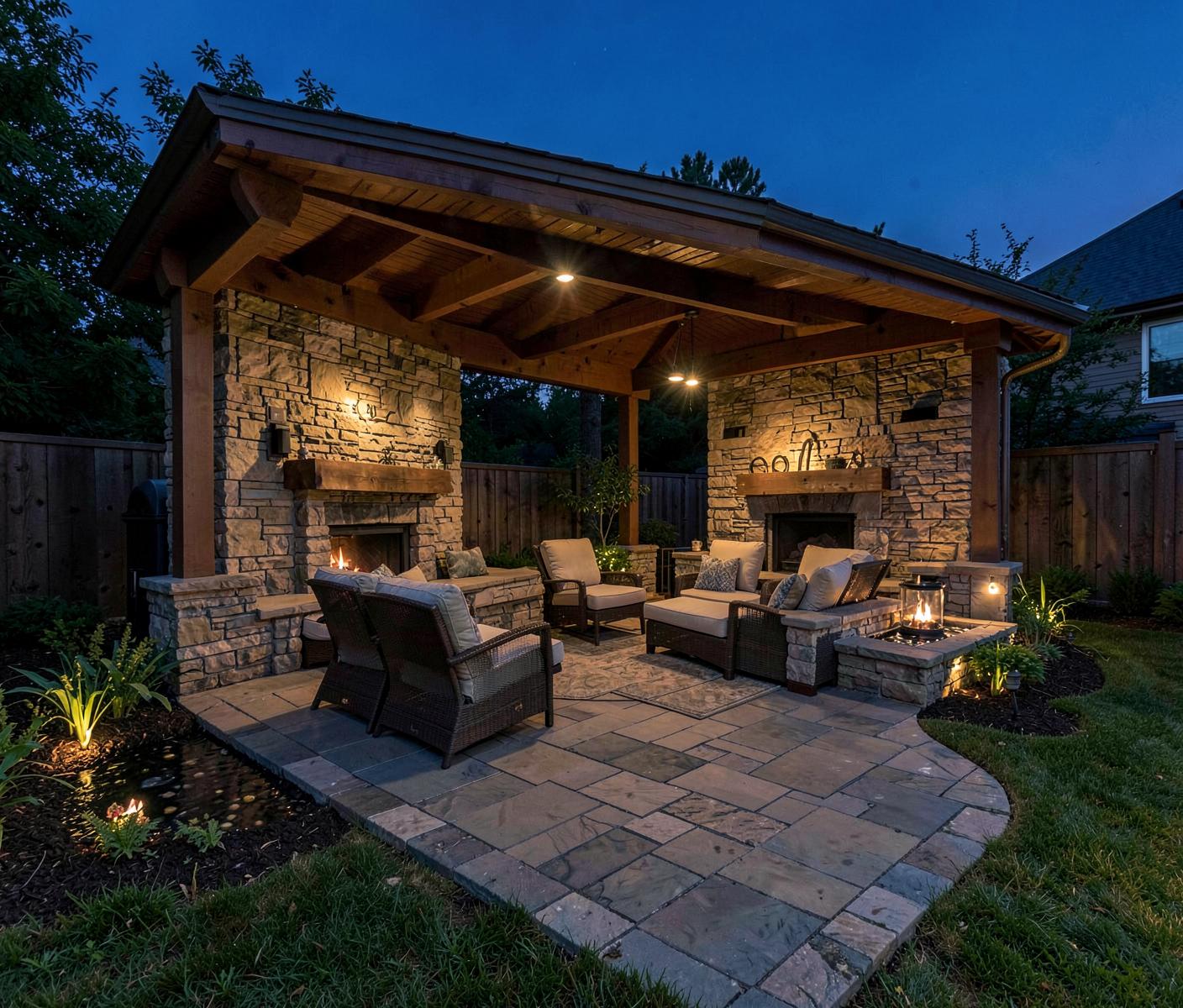
Completed Project
Pavilion - Stone fireplace - Flagstone patio
The Design-Build Bottleneck
Long Sales Cycles Hide Where the Money Is Lost
Your average project may take four months to sell. That means a bad quarter today was created by a leak you cannot see yet.
Homeowners inquire about a single element - a patio, a pergola, a firepit - and never learn you design the whole yard.
Design agreements sit unsigned. Presentations get delayed. Phased proposals go quiet after phase one.
And because the cycle is long, most design-build firms cannot say which channel produced the builds they broke ground on this spring.
Before adding another marketing line item, quantify the prize:
What is one more complete backyard build worth to your firm?
Design-Build Math
What Can Your Firm Spend to Win One More Full Build?
Enter your build contract average, your margin after design and trade coordination, and your consult-to-signed rate. You will see the profit in one project, the consults behind it, and how much acquisition cost the build can carry.
A rough figure is fine to start with.
Includes advertising and marketing costs. Your actual plan will use your market and service mix.
One build
$25,000
Approx. gross profit on one build
$11,250
Added sales per month
$50,000
2 more builds a month
Serious prospects needed
About 7
every month
Monthly spend to win 2 builds
$5,000
Gross profit left after that spend
About $17,500
Planning math only - not a promise. Your market, pricing, competition, lead quality and sales process all move these figures.
Acquisition cost against full-build profit
| Spend per build won | Monthly spend for 2 builds | Gross profit left |
|---|---|---|
| $1,250 | $2,500 | $20,000 |
| $2,500 | $5,000 | $17,500 |
| $3,750 | $7,500 | $15,000 |
| $6,250 | $12,500 | $10,000 |
Now Let's Look at Your Design Agreement Pipeline
The Real Metric
At $25,000 a Build, the Right Consultations Matter More Than Cheap Leads
When one signed project carries $11,250 of gross profit, a $250 inquiry is not the thing to optimize.
What matters is how many qualified design consultations you get and what share of them become design agreements.
Firms that optimize for cheap inquiries end up with a calendar full of element-only work and no full builds.
Watch cost per signed design agreement, then cost per signed build.
We work from the build value backward, and treat the design agreement as the real conversion point.
The Work Itself
Three Places Full Builds Are Won
Be Positioned as a Designer, Not a Vendor
Homeowners searching for one element need to understand that you plan and build the whole space.
This can include
- Full-project case studies with plan drawings
- Pages for pavilions, pools, kitchens and grading as one scope
- Search visibility on design-build terms
- Google Maps presence with complete-yard imagery
- Architect and designer credibility signals
- Targeting in neighborhoods that support the scope
Sell the Design Agreement First
The signature that predicts the build is the design agreement. The site should be engineered to earn it.
This can include
- Clear explanation of the design process and fee
- Before, plan and finished sequences per project
- Investment ranges to pre-qualify homeowners
- Design consultation booking flow
- Reviews describing the design experience
- Tracking from first touch through agreement
Manage a Four-Month Sale Without Dropping Threads
Long cycles fail quietly. Structure keeps opportunities alive through revisions and phasing.
This can include
- Missed-call text-back and fast first reply
- CRM stages from inquiry to design to build
- Follow-up cadence through plan revisions
- Reminders around presentations and selections
- Phase-two outreach after the first phase completes
- Reactivation of designs that never got built
Free Growth Analysis
A Working Session on Your Design-Build Funnel
Step 1
Your Project Economics
- Contract average for a complete build
- Margin after design hours and subs
- Split between full builds and single elements
- Target full builds per month
- Consult-to-agreement and agreement-to-build rates
- Design and production capacity
Step 2
How Your Pipeline Behaves Today
- Where design consults originate
- Visibility on design-build versus element searches
- What your site implies about project scope
- Time from inquiry to consultation
- How design agreements are presented
- What happens to unbuilt designs
Step 3
Where Full Builds Slip Away
- Inquiries scoped down to one element
- Consults with no budget qualification
- Presentations that stalled after delivery
- Phase-two work never pursued
- Long-cycle opportunities with no follow-up
- Channels with no attribution to signed builds
Step 4
What You Leave With
A written view of your funnel from inquiry to signed build, with the cost of fixing each stage measured against your own contract average.
Everything arrives itemized so partial adoption is straightforward:
- Positioning fixes that raise average project scope
- Work that only justifies itself at higher build volume
- Tests worth a defined budget and window
- Items we would recommend against funding
The analysis stays with you whatever you decide.
Illustrative Model
Twelve Months Modeled on Complete Builds
Two extra $25,000 backyards a month is a fundamentally different plan than six patio-only jobs.
Modeling the target first is what turns a marketing budget into a business case.
Here the calculator's math runs across a full year.
Modeled Target
2 Additional Full Builds / Month
Modeled at a $25,000 average signed contract
- Additional builds over 12 months
- 24
- Contract value of those builds
- $600,000
- Gross profit at a 45% margin
- $270,000
- Qualified design consults required at 3-in-10
- 80
- Acquisition budget at $2,500 per build
- $60,000
- Gross profit remaining after acquisition
- $210,000
Illustration built from the inputs above. Not a projection of your results, revenue, lead volume or job volume.
Measurement
Reporting That Tracks a Long Sale
Month by month, you should be able to see:
- Inquiries received
- Qualified design consultations held
- Design agreements signed
- Builds contracted
- Value of contracted builds
- Channel attribution across the whole cycle
Inquiries
22
Qualified Consults
9
Design Agreements
4
Builds Contracted
2
Contracted Value
$50,000
Avg. Build
$25,000
Stage By Stage
- Inquiries22
- Qualified9
- Agreements4
- Builds2
Source Of The Work
- Organic search29%
- Search ads24%
- Houzz and social20%
- Architect referral17%
- Past client10%
Sample figures shown to illustrate the format, not client outcomes. Long sales cycles also mean attribution requires disciplined CRM use.
Other Trades We Work With
Building more than one type of project? These pages run the same numbers with different job values and sales cycles.
Sequence
How a Long-Cycle Rollout Is Usually Staged
Weeks 1-3
Map the funnel stages and instrument tracking from inquiry through signed build.
Weeks 4-8
Tighten consult qualification and follow-up through plan presentation.
Months 3-6
Build design-build visibility and publish full-project case studies.
Months 6-12
Fund the channels producing design agreements and pursue phase-two work systematically.
Because a build can take months to sell, early signals show up in consults and design agreements rather than contracts. Across a twelve-month plan the target build count usually comes into view around months three to five - a pattern, not a commitment. That lag is why we measure stage by stage, and why nothing here is promised on a date.
Two Fair Questions
Why Begin Now, and What Are You Signing Up For?
Design-build owners ask both of these, and the long sales cycle makes the answers matter more here.
Why Not Wait a Quarter?
Because with a four-month sale, waiting a quarter pushes revenue out most of a year.
The homeowners who will sign design agreements this fall are researching now, and case studies and search visibility take months to establish.
Every quarter of delay is a quarter of pipeline you cannot recover later by spending harder.
In a four-month sale, a quarter of waiting costs most of a year of revenue.
Do I Have to Commit to Everything?
No. The plan is modular by design.
We will model the expected result of implementing one stage - qualification, or presentation follow-up - so a partial start can be compared against the full plan in dollars.
Most firms start where the funnel leaks worst, which is usually cheaper than adding traffic.
Fix the leak before paying to pour more in.
FAQ
Straight Answers Before You Book
Bring your build average, consult close rate and design agreement count. That is enough to work with.
Yes. The plan should track leading indicators such as qualified consultations, design meetings, proposals, and deposit-ready opportunities before final contracts close.
Next Step
What Would One More Complete Backyard a Month Do for Your Firm?
Run your numbers, then let's find the stage where full builds are being lost.
We will look at consult qualification, design agreement conversion and the sources behind the builds you contracted last year.
Funnel read from inquiry through signed build
Budget sized to your build contract average
Positioning aimed at whole-yard scope
Start with one stage if that is the sensible move
Free, roughly 30 minutes, no obligation attached.